
FindAllNews.lkbeta

Wednesday 11 November 2026Wed 11 Nov 2026

Results for “protest”

GMOA to stage protest outside Colombo National Hospital on 10 November

The Government Medical Officers’ Association (GMOA) will protest outside the Colombo National Hospital on 10 November over unresolved grievances, including salary and allowance cuts, official accommodation issues, doctor safety, and staffing shortages. GMOA Assistant Secretary Dr. Chamil Wijesinghe stated that islandwide district representatives will participate. He assured that hospital services will continue uninterrupted as the demonstration is not a strike. The association noted that fewer than 25,000 doctors remain in active service, with cadres unrevised since 2015. It added that one-third of doctors' overtime and holiday allowances were suspended under a 2025 revision. Having submitted proposals in August for the 2027 Budget, the GMOA warned of further trade union action if demands are ignored. Meanwhile, Development Officers islandwide launched a sick leave campaign on 9 November over their own demands.
Frontline Socialist Party rejects President Dissanayake’s proposed amendments to Organised Crime Act

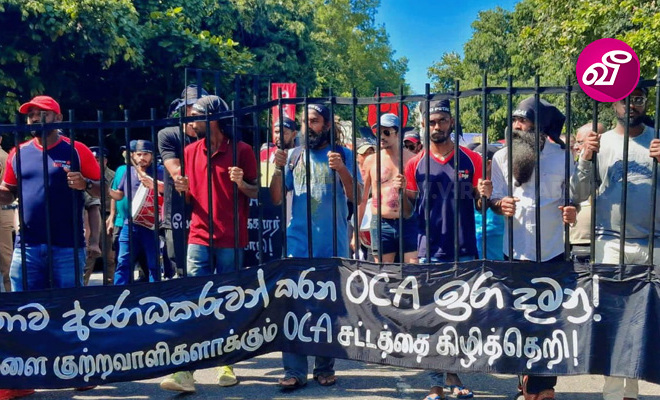
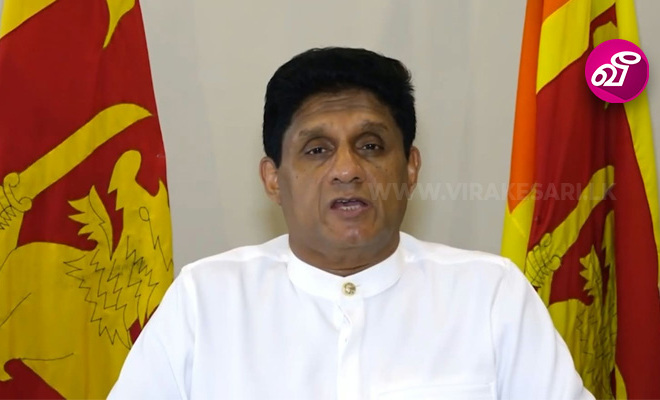
The Frontline Socialist Party has rejected President Anura Kumara Dissanayake’s proposed amendments to the Organised Crime Act, calling them superficial changes that fail to protect democratic rights and civil liberties. Speaking on Friday, FSP Education Secretary Pubudu Jayagoda said the government had reconsidered its stance only because of widespread public opposition, including a 4 November protest near Parliament. Jayagoda criticised the President’s proposal to cut police detention from 72 to 48 hours, arguing the legislation still allows detention orders up to one year without judicial review. He added that the bill grants sweeping police powers, reduces magistrates to rubber stamps, and contains fundamental flaws that go beyond modifying gang identification provisions based on tattoos.

People's Struggle Movement protests near Parliament demanding repeal of anti-terror laws

The People’s Struggle Movement staged a protest near Parliament on 4 November 2026, demanding the repeal of the Prevention of Terrorism Act and other security legislation. Demonstrators, joined by groups including the Frontline Socialist Party and Women’s Movement for Freedom, carried mock prison windows, painted their bodies, and disrupted vehicular traffic. Protesters opposed the PTA, the proposed PSTA, and a third law—identified as the Online Safety Act by FT.lk, but as the Organized Crime Act by Virakesari. Addressing the rally, executive committee member Vasantha Mudalige warned that the proposed laws would suppress public dissent against government economic policies and undermine civil liberties.

Opposition protests in Parliament on 3 November over blocked no-confidence motion against Speaker

Opposition MPs staged a protest in Parliament on 3 November 2026 after Deputy Speaker Rizvie Salih refused immediate permission to raise privilege issues over a blocked no-confidence motion against Speaker Dr. Jagath Wickramaratne. Opposition Leader Sajith Premadasa argued that rejecting the motion—signed by 44 MPs containing 50 charges—violated parliamentary privileges and democratic rights. MP Dayasiri Jayasekara noted that the motion had been set aside on sub judice grounds. Salih said five privilege questions arrived after 9:00 a.m. and required examination. However, The Morning reported that Jayasekara and MP Mujibur Rahman disputed this, stating they had submitted theirs before 9:00 a.m. Opposition MPs displayed placards and chanted slogans in the chamber, while Dinamina reported that parliamentary staff prevented several opposition members from attempting to take the Mace.

Global cost-of-living crisis sparks protests across the Americas, Europe and Asia

A surging cost of living is driving anti-government protests and riots across the Americas, Europe and Asia, and is set to shape US midterm elections, according to Daily FT. Protests in the European Union involve adolescents facing unaffordable higher education and grim employment prospects for Generation Z amid expanding robotics and artificial intelligence. The report attributes the crisis to supply constraints driven by wars and climate change, which remain beyond the control of monetary authorities. It warns that central banks' policies of raising interest rates and cutting public spending will fail, ultimately reducing investment, increasing unemployment and worsening poverty levels.

Monks temporarily suspend Colombo protest demanding Gnanasara Thero’s release on 25 October

Venerable Ulapane Sumangala Thero announced that a satyagraha at Colombo's Viharamahadevi Park demanding the release of Bodu Bala Sena General Secretary Galagoda Aththe Gnanasara Thero was temporarily suspended on 25 October 2026. The decision followed written notification that the Mahanayake Theros of the Three Nikayas would intervene and hold discussions with the government to resolve the issue through legal means. The senior prelates urged the Sangha to uphold monastic discipline, cautioning that demonstrations seeking a presidential pardon were being exploited to tarnish the clergy's reputation. Gnanasara Thero was jailed after the Supreme Court invalidated his 2019 presidential pardon for contempt of court. Regarding the campaign's start, FT.lk reported monks gathered at the Presidential Secretariat on 15 October, while Thamilan stated it began on 16 October.

Supreme Court pardon ruling and monk regulations test Sri Lanka's constitutional limits

The Supreme Court invalidated former President Maithripala Sirisena’s 2019 presidential pardon of Ven. Galagoda Aththe Gnanasara Thero, as new prison regulations were introduced governing the removal of robes of imprisoned Buddhist monks. These developments have renewed constitutional questions over how public power should be exercised when intersecting with criminal accountability, religious authority, and the rule of law. In response to State decisions concerning Buddhism, a large gathering was recently reported in protest around Viharamahadevi Park. The controversies highlight tensions between the constitutional recognition accorded to Buddhism under Article 9, general guarantees of religious freedom under Article 14, and presidential clemency under Article 34.

Global South groups urge IMF and World Bank to change priorities at Bangkok meetings

The 2026 Annual Meetings of the International Monetary Fund and World Bank Group concluded in Bangkok, Thailand, bringing together over 15,000 participants from 191 member countries from 12 to 18 October. Global South governments, civil society, and think tanks, including Sri Lanka’s Institute of Political Economy, urged altered priorities, pointing to heavy debt-servicing burdens, deficient public services, and inadequate energy and water access. They called for predictable public finance to invest in health, education, food sovereignty, and green industrial policies that create decent jobs. Hundreds of demonstrators also marched near the venue to protest land rights impacts, carbon pricing models, and policies favoring foreign capital over local livelihoods.

Colombo court refuses to lift eviction order on monks demanding Gnanasara Thero's release

Buddhist monks began a satyagraha at Colombo’s Viharamahadevi Park on 16 October 2026, demanding the release of Bodu Bala Sena General Secretary Galagodaaththe Gnanasara Thero, who is imprisoned for contempt of court. The protest involved pirith chanting, torch demonstrations, and scuffles with police, during which Ven. Balangoda Kassapa Thero was injured. Police also detained an individual carrying a weapon near the site on 23 October. The Colombo Chief Magistrate’s Court issued an order barring protesters, including Kassapa Thero and Ven. Ulapane Sumangala Thero, from continuously occupying the park or obstructing adjacent roads. On 23 October, Chief Magistrate Asanga S. Bodaragama rejected a motion to withdraw the eviction order, while also refusing the Attorney General’s request to issue arrest warrants for remaining demonstrators.

National Peace Council warns three proposed bills risk enabling state repression

The National Peace Council expressed deep concern that three bills before Parliament risk entrenching excessive state power and enabling repression under the National People’s Power government. The draft laws are the Protection of the State from Terrorism Bill, the Prevention of Organised Crimes Bill, and the NGO Registration and Supervision Bill. The council warned the terrorism bill risks bringing legitimate political protests, trade union actions, and civil disobedience under terrorism offences, alongside prolonged detention and restricted legal access. Petitions challenging it were heard by the Supreme Court. Additionally, the council stated the organised crimes bill was introduced without public discussion, granting extensive surveillance powers, detentions of up to a year, and the admissibility of confessions to police.

Monks perform occult rituals during political demonstration at Colombo's Viharamahadevi Park

A demonstration initially described as a Satyagraha for the “protection of the robe” at Colombo's Viharamahadevi Park has featured occult rituals targeting political adversaries. The event involved figures including Samantha Bhadra, formerly known as Pitiduwe Siridhamma, who led public offerings to the demon Mahasona, known as Mahason Pideniya. Ven. Kotapola Rahula Thero, a senior prelate of the Kotte Sangha Sabha, was an early participant in the protest, which also involved opposition factions and lay participants.

Kotte prelates demand release of convicted monk Gnanasara

Top prelates of the Kotte Sri Kalyani Samagri Dharma Maha Sangha Sabha of the Siam Nikaya held an emergency conclave at their Kotte headquarters to demand the immediate release of Galagoda Aththe Gnanasara, a convicted and imprisoned monk. The prelates also protested the prison administration's removal of his saffron robes under existing regulations. The Daily FT framed the display of luxury SUVs at the event as contradicting Buddhist principles of renunciation, and drew a parallel to the 1959 assassination of a Prime Minister. The report quoted a pun by journalist Tarzie Vittachi, calling such monastic leaders "Buddy-Racketeers," a reference to Mapitigama Buddharakkhita, the then-chief incumbent of Kelaniya Raja Maha Vihara. It criticized the prelates for shielding a convict from ordinary laws.

Monks continue protest for Gnanasara Thera's release as talks stall

Buddhist monks continued their protest outside the Presidential Secretariat in Colombo on Thursday, demanding the release of Galagoda Aththe Gnanasara Thera, after talks with Presidential Secretariat officials ended without agreement. Representatives of the protesting monks met the President’s Chief of Staff, who reportedly said the Government needed more time to consider their demands. No timeframe for a decision was agreed, prompting the monks to continue their demonstration. Tensions rose after protesters erected a temporary hut on Galle Road outside the Secretariat. Police ordered its removal, and the protesters moved the structure elsewhere. The monks have said they will not leave until the Government makes a positive announcement on Gnanasara Thera’s release. The demonstration continued into the evening, disrupting traffic.

Government urged to heed protests for fairer taxes and ease burden

The Jana Aragala Movement and the Frontline Socialist Party staged a protest march in Colombo on 3 October, demanding the removal of unfair tax policies and relief from the rising cost of living. President and Finance Minister Anura Kumara Dissanayake's National Power (NPP) government faces pressure to address the human cost of its tax arithmetic, balancing fiscal discipline with the needs of ordinary citizens. The report says direct taxes burden professionals and workers, while indirect taxes like VAT hit basic goods such as flour, books, and medicine, regardless of ability to pay. It warns that ignoring tax relief could alienate the NPP's core working- and middle-class base, curb consumption and savings, and risk street protests and strikes that damage investor confidence.

Sri Lanka's democracy and JVP's ultimate test

Sri Lanka's 2024 political transition brought Anura Kumara Dissanayake and the National People's Power (NPP) to office after an unprecedented economic crisis, the Aragalaya protest movement, and public anger over corruption. The NPP, led by the Janatha Vimukthi Peramuna (JVP), promised to dismantle privilege, end corruption, and create a new political culture. More than two years later, questions are emerging about whether the JVP has fully transformed into a party of competitive democracy or whether Sri Lanka is moving toward one movement dominating institutions long-term. The report notes Sri Lanka remains a functioning democracy with open opposition, critical newspapers, and active civil society, but warns democratic erosion often begins before elections are cancelled. The JVP's past includes armed insurrections in 1971 and 1987-89, during which many lives were lost, though the State also committed grave abuses. The report says recalling this history is not to condemn the present-day JVP permanently.

Hambantota women protest in Colombo for Tobacco-Free Generation policy

Over 300 women and mothers from the Hambantota District, organized by the Hambantota Women’s Development Federation, protested outside the Presidential Secretariat last week, demanding immediate government action on the proposed Tobacco-Free Generation (TFG) policy. They presented a request to President Anura Kumara Dissanayake with nearly 10,000 signatures in support of the policy, which would ban tobacco sales to anyone born in or after 2010, ensuring those turning 21 in 2031 can never legally buy tobacco. The TFG proposal was formally submitted to the Health Minister by the Sri Lanka Medical Association (SLMA) in 2024 and 2025, and again in 2026 by the National Authority on Tobacco and Alcohol (NATA) and SLMA, but it has not yet been submitted to the Cabinet for approval. The protest proceeded despite adverse weather conditions.

Parliament votes on 22A today amid Opposition protest

Parliament votes on the 22nd Amendment to the Constitution today, concluding a two-day debate. The government insists its 158 MPs are united, while the Opposition staged a protest blocking Parliament's entrance. The amendment requires a two-thirds majority of 150 of 225 MPs. The Supreme Court ruled it does not need a referendum but directed specific changes. Justice Minister Harshana Nanayakkara said it aims to speed up case hearings, not control or suppress. Prime Minister Harini Amarasuriya dismissed reports of divisions within the NPP group. Opposition Leader Sajith Premadasa alleged the amendment undermines rule of law and challenged the government to hold Provincial Council Elections.

Supreme Court warns of threat to judicial independence in 22nd Amendment ruling

The Supreme Court, in its Determination on the 22nd Amendment to the Constitution Bill, warned of "a particular threat to judicial independence which should concern us," citing pressures from political and public criticism that risk eroding public trust in the rule of law. The Court ruled the Bill, which raises the retirement age of Supreme Court judges to 67 and Court of Appeal judges to 65, does not require a referendum under Article 83 and can be enacted with a two-thirds parliamentary majority alone. The Bench, led by Chief Justice P. Padman Surasena, quoted its earlier decision in Hettiarachchi vs. Seneviratne and Lord Denning's words, saying public criticism should not deter judges. Opposition lawmakers criticized the Determination and attacked the Chief Justice in Parliament, ahead of a public protest against the Amendment.

SLPP skips 22A protest, citing SJB snub

The Sri Lanka Podujana Peramuna (SLPP) stayed away from the Opposition protest against the 22nd Amendment on Thursday, after a Samagi Jana Balawegaya (SJB) MP indicated that other Opposition parties should not join, SLPP General Secretary Sagara Kariyawasam said. Kariyawasam said the SLPP had been prepared to take part but reconsidered after the SJB MP’s public statement. He claimed that neither Opposition Leader Sajith Premadasa nor other senior SJB representatives had publicly rejected or corrected the remarks. “We cannot go there while maintaining our self-respect under such circumstances,” he said. He nonetheless said the SLPP supported opposition to the Amendment and wished the protest success. “This should not be an SJB protest. It should be a protest by the entire country.” Kariyawasam described the Amendment as a serious threat to democracy and accused the Government of misusing the two-thirds parliamentary majority it received.

Namal Rajapaksa remanded over alleged Rs. 100m Airbus-linked bribe

SLPP National Organiser and MP Namal Rajapaksa was arrested by the Commission to Investigate Allegations of Bribery or Corruption (CIABOC) on 4 September 2026 after over five hours of questioning. He was produced before the Colombo Chief Magistrate’s Court, which denied bail and remanded him until 18 September. CIABOC alleges Rajapaksa received Rs. 100 million from a Sri Lankan businessman during 2014 and 2015, linked to an aircraft procurement deal for SriLankan Airlines. The probe says over €1.4 million was paid as a bribe into a Standard Chartered Bank account in Singapore under BIZ Solutions Inc., with $800,000 transferred to an OCBC Bank account held by Sabre Vision Holdings Ltd. The arrest follows statements from the businessman, Airbus officials, and documents gathered. This is Rajapaksa’s fourth arrest; earlier cases include the Krrish (2016) and Hambantota protest (2017) cases, both pending, while he was acquitted in the HelloCorp case in 2023.

AKD vows to scrap PTA this year, replace with targeted organised crime law | Daily FT

President Anura Kumara Dissanayake pledged to repeal Sri Lanka's controversial Prevention of Terrorism Act (PTA) this year, replacing it with a new, narrowly defined Organised Crime Act. He also committed to replacing the current Online Safety Act with a revised framework. Dissanayake emphasized his administration's dedication to upholding civil liberties, democracy, and human rights, contrasting its approach with previous governments by highlighting restraint in handling protests and rejecting allegations of influencing the judiciary.

Peasants in revolt: A step towards a new mode of agriculture | Daily FT

Sri Lankan farmers are in revolt, protesting the NPP Government's failure to address low paddy prices and the broader agricultural crisis. The article argues that the current agricultural system, heavily influenced by the now-obsolete Green Revolution, has led to declining yields, soil degradation, and corporate exploitation. It calls for a new, environmentally friendly agricultural package that reduces costs and increases farmer returns, urging farmers to mobilize and demand this fundamental political change.

Govt. retreats on VAT threshold cut | Daily FT

The Sri Lankan government has withdrawn plans to lower the Value Added Tax (VAT) and Social Security Contribution Levy (SSCL) registration thresholds, maintaining the existing Rs. 60 million annual turnover limit. This reversal aims to protect thousands of small and medium-sized enterprises (SMEs) from additional tax burdens, citing economic difficulties caused by Cyclone Ditwah and the Middle East conflict. While the Opposition supported the decision to spare SMEs, they protested the procedural handling, arguing that the changes should have been referred back to the Committee on Public Finance.

From protestation to pragmatism: NPP’s economic coming of age? | Daily FT

The article highlights a significant shift in Sri Lanka's National People's Power (NPP) government, which, despite its socialist roots, is now embracing surprisingly orthodox economic policies. Senior Presidential Adviser Duminda Hulangamuwa advocates for macroeconomic stability, fiscal discipline, and private-sector-led growth, prioritizing these over state expansion and redistribution. This pragmatic approach is seen as a necessary continuity with IMF-supported stabilization efforts following the 2022 economic collapse, marking the NPP's 'economic coming of age'.